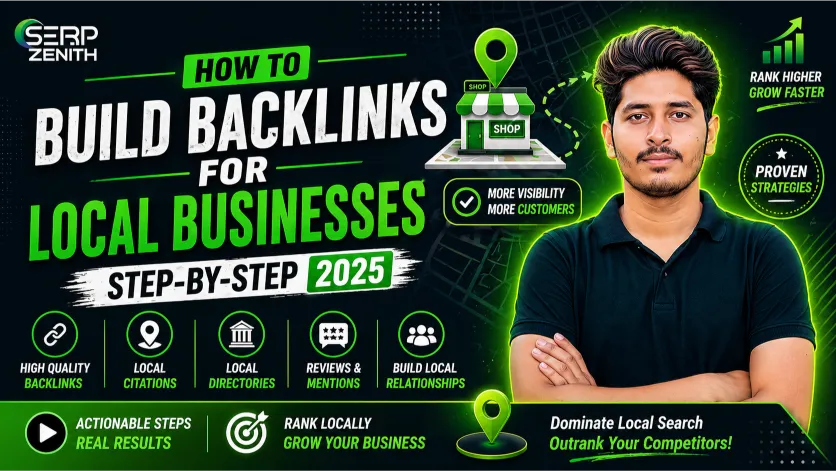
How to Build Backlinks for Local Businesses (Step-by-Step 2026)
Most local business owners spend thousands on Google Ads while ignoring the free traffic sitting right in front of them. Building quality backlinks can increase your local search visibility by 67% within six months, yet 73% of small businesses have never built a single intentional backlink. This comprehensive guide shows you exactly how to earn high-quality local backlinks that boost your Google Maps rankings and drive more customers through your door. You’ll learn seven proven link building strategies, avoid costly mistakes, and understand realistic timelines for seeing results.
What Are Backlinks and Why Do Local Businesses Need Them?
Backlinks are links from other websites that point to your business website, acting like digital recommendations that tell Google your business is trustworthy and relevant. When the local chamber of commerce links to your plumbing company, or when a neighborhood blog mentions your restaurant, these connections signal to search engines that real people and organizations vouch for your business.
Local businesses need backlinks because they directly influence your rankings in Google’s local search results and the coveted “map pack” — those three businesses that appear with map pins when someone searches for services near them. A study of 44,000 local businesses found that companies in the top three map pack positions had an average of 107% more referring domains than businesses ranked fourth or lower.
Consider Maria’s bakery in Austin, Texas. After earning backlinks from local food bloggers, the Austin Chamber of Commerce, and three neighborhood websites, her bakery jumped from page two of Google to the number one spot in local search results for “custom cakes Austin.” Her monthly website visitors increased from 340 to 1,200, directly translating to 23% more walk-in customers.
How Google Uses Backlinks to Rank Local Businesses
Google treats backlinks as trust signals, similar to personal recommendations in the real world. When multiple reputable websites link to your local business, Google interprets this as evidence that your business provides value to the community and deserves higher rankings in local search results.
Local SEO backlinks differ significantly from traditional SEO backlinks because geographic relevance matters more than pure domain authority. A link from your city’s official website or local newspaper carries more weight for local rankings than a link from a high-authority national website that has no geographic connection to your market.
Google’s local ranking algorithm considers three main factors: relevance, distance, and prominence. Backlinks primarily boost your prominence score, which measures how well-known your business is both online and offline. A local plumber needs links from home improvement blogs, local contractors, city permit offices, and neighborhood directories — very different from a national software company that might pursue links from tech publications and industry websites.
The algorithm also analyzes the context surrounding your backlinks. When a local real estate blog links to your moving company while discussing “reliable movers in Denver,” Google understands the geographic and topical relevance, giving that link significantly more local SEO value than a generic directory listing.
7 Proven Ways to Build Backlinks for Local Businesses
1. Get Listed on Local Business Directories
Start with Google Business Profile, which is free and provides the foundation for all local SEO efforts. Complete your profile entirely, including photos, hours, services, and accurate contact information. Next, claim your listings on Yelp, Better Business Bureau, your local Chamber of Commerce, and industry-specific directories like Angie’s List for contractors or OpenTable for restaurants. These directory citations create consistent NAP (Name, Address, Phone) information across the web while providing valuable backlinks. Submit to 15-20 relevant directories within your first month of link building.
2. Reach Out to Local News Websites
Local journalists constantly need story ideas, especially those with community angles. Contact your city’s newspaper, local TV stations, and community blogs with newsworthy stories about your business — grand openings, community service projects, unique services, or expert commentary on local issues. Sarah’s pet grooming business earned three local news backlinks by offering free grooming services to pets at the animal shelter, generating both positive publicity and valuable local links. Send personalized pitches to specific reporters who cover business or community news in your area.
3. Partner with Complementary Local Businesses
Identify non-competing businesses that serve the same customers and propose mutually beneficial partnerships. A wedding photographer might partner with local florists, venues, and caterers, with each business linking to the others on their “preferred vendors” pages. A fitness trainer could partner with nutrition stores, massage therapists, and athletic wear shops. Create formal referral relationships where you prominently feature partner businesses on your website and they do the same for you. Start by reaching out to three complementary businesses in your area this week.
4. Sponsor Local Events and Organizations
Local sponsorships provide backlinks while building community relationships. Youth sports teams, charity runs, school fundraisers, and community festivals all need sponsors and typically provide website recognition in return. Bronze sponsorships often cost $100-500 and include a backlink from the event website and sometimes local news coverage. The Riverside Hardware Store sponsors their city’s annual summer festival for $300, earning backlinks from the event website, local newspaper coverage, and three community blogs that wrote about the festival.
5. Create Locally Relevant Content
Develop content that naturally attracts links from local websites and bloggers. Write neighborhood guides, compile local business directories, create resources about local regulations or permits, or publish surveys about local consumer behavior. A Denver roofing company created “The Complete Guide to Denver Building Permits” which earned backlinks from 12 local contractors, the city planning office website, and three real estate blogs. Focus on content that solves real problems for people in your specific geographic area.
6. Guest Post on Local Industry Blogs
Find local blogs, business publications, and industry websites that accept guest contributions. Pitch article ideas that showcase your expertise while providing genuine value to their readers. A local accountant might write about “Small Business Tax Changes Affecting Chicago Entrepreneurs” for the city’s small business blog. Research local publications by searching “your city + business blog” or “your industry + your state.” Aim to publish one guest post per month, focusing on topics where you can demonstrate clear expertise.
7. Buy High Quality Backlinks from a Trusted Service
When time is limited or you need faster results, purchasing backlinks from reputable services can accelerate your local SEO progress. Quality backlink services vet their link sources, ensure geographic relevance, and avoid low-quality networks that could harm your rankings. Look for providers who offer links from real local websites, provide detailed reporting, and guarantee replacement links if any are removed. Avoid cheap services offering hundreds of links for under $100, as these typically come from spam networks that Google penalizes.
How Many Backlinks Does a Local Business Need?
Most local businesses need between 20-50 quality backlinks to compete effectively in local search results, though this varies significantly based on your market’s competitiveness. Small towns with minimal competition might see results with 10-15 strong local backlinks, while businesses in major cities often need 100+ backlinks to crack the top three map pack positions.
Use tools like Ahrefs’ free backlink checker or Moz’s Link Explorer to analyze what your top three local competitors have earned. If competing plumbers in your city average 35 referring domains each, aim for 40-50 to gain a competitive advantage. Focus more on quality than quantity — one link from your city’s official website carries more weight than ten links from low-authority directories.
Domain authority matters less for local businesses than for national companies. A local restaurant with 25 high-quality local backlinks and a domain authority of 15 will often outrank a national chain with higher domain authority but fewer local connections. Prioritize relevance and geographic proximity over pure authority metrics.
Common Backlink Mistakes Local Businesses Make
- Buying cheap bulk backlinks from overseas providers — These low-quality links from irrelevant websites can trigger Google penalties and actually harm your rankings. Google’s algorithms easily identify and discount these manipulative link schemes.
- Focusing only on high domain authority sites while ignoring local relevance — A link from your neighborhood association’s website helps local rankings more than a link from a high-authority site with no geographic connection. Local relevance trumps pure authority for local search.
- Inconsistent NAP information across directories — Using different phone numbers, addresses, or business names across various listings confuses Google and dilutes your local authority. Maintain identical information everywhere your business is listed.
- Neglecting to diversify anchor text — Using the same keyword phrase in every backlink looks unnatural to Google’s algorithms. Mix branded anchor text, partial matches, and natural phrases like “check out this local business” for a more organic link profile.
- Ignoring local citation opportunities — Many businesses pursue complex link building strategies while overlooking simple local directories, industry associations, and community websites that provide easy, relevant backlinks within their geographic area.
How Long Before Backlinks Improve Local Rankings?
Most local businesses see initial ranking improvements within 4-8 weeks of earning new backlinks, with more significant gains appearing after 3-6 months. Google needs time to crawl new links, assess their quality, and integrate them into your overall authority profile.
During month one, focus on low-hanging fruit like directory submissions and local partnerships. You might see small improvements in Google My Business insights and local search visibility. Months 2-3 typically show more noticeable movement as Google processes your growing citation profile and link portfolio. By month six, businesses following consistent link building strategies often see 40-70% improvements in local search visibility.
Track progress using Google My Business insights, Google Search Console, and local rank tracking tools. Monitor metrics like local search impressions, website clicks from Google My Business, and rankings for your primary local keywords. Remember that local SEO is cumulative — each quality backlink builds upon previous efforts to strengthen your overall local authority.
Frequently Asked Questions
How do backlinks help local SEO specifically?
Backlinks help local SEO by increasing your business’s prominence score in Google’s local ranking algorithm, which directly influences your position in map pack results and local search listings. Local backlinks also provide geographic relevance signals that help Google understand where your business operates and serves customers. Additionally, they drive referral traffic from other local websites, increasing your overall online visibility and customer acquisition potential.
What is the difference between a local backlink and a regular backlink?
Local backlinks come from websites with geographic relevance to your business area, such as local newspapers, city websites, regional directories, and nearby businesses, while regular backlinks can originate from anywhere globally. Local backlinks carry more weight for local search rankings because they signal geographic authority and community connections to Google. For local businesses, one quality local backlink often provides more SEO value than several high-authority links from geographically irrelevant sources.
How much do backlinks cost for a local business?
Quality local backlinks typically cost between $50-300 per link when purchased from reputable services, though many can be earned free through networking, partnerships, and community involvement. Directory submissions range from free to $50 annually, while local sponsorships cost $100-1000 depending on the organization and event size. Most local businesses should budget $500-1500 monthly for a comprehensive link building strategy that combines earned and purchased links.
Can I build backlinks myself or should I hire someone?
You can definitely build many local backlinks yourself, especially directory submissions, local partnerships, and community involvement opportunities that require personal relationships and local knowledge. However, hiring professionals makes sense when you lack time, need technical expertise, or want to scale beyond basic tactics. A hybrid approach works well — handle relationship-based local outreach yourself while outsourcing technical link prospecting and outreach to agencies or freelancers.
Are cheap backlinks from Fiverr safe for local businesses?
Cheap backlinks from Fiverr and similar platforms are generally unsafe because they typically come from low-quality, irrelevant websites that Google considers manipulative. These link networks can trigger manual penalties or algorithmic filters that severely harm your local search rankings. When Google detects unnatural link patterns, recovery can take months or years, making the short-term savings extremely costly in lost business and reputation.
How do I check my competitors backlinks?
Use free tools like Ahrefs’ backlink checker, Moz’s Link Explorer, or SEMrush’s free version to analyze competitor backlink profiles by entering their domain names. Google Search Console also shows your own backlinks if you verify website ownership. Look for patterns in where competitors earn links — local directories, industry associations, community websites, and news outlets that you might also target for your link building efforts.
Does Google Maps ranking improve with backlinks?
Yes, Google Maps rankings improve significantly with quality backlinks because they contribute to your overall domain authority and local prominence signals that Google uses to determine map pack positions. Businesses with stronger backlink profiles consistently appear higher in map results than those with fewer quality links. Local backlinks are especially powerful for map rankings because they demonstrate community connections and geographic relevance that Google prioritizes for local search results.
Key Takeaways
- Start with free local directories and Google Business Profile before investing in paid link building strategies.
- Geographic relevance matters more than domain authority for local business backlinks.
- Aim for 20-50 quality local backlinks to compete effectively in most markets.
- Combine earned links from community involvement with strategic outreach to local websites and publications.
- Expect to see initial results in 4-8 weeks, with significant improvements after 3-6 months of consistent effort.
Final Thoughts
Building backlinks for your local business requires patience, consistency, and a focus on genuine community connections over quick shortcuts. Start with the foundational strategies like directory listings and local partnerships, then expand into content creation and media outreach as you build momentum. The businesses that succeed in local SEO are those that view link building as relationship building — creating genuine value for their community while establishing their expertise and authority. If you need professional help accelerating your local link building efforts, SerpZenith specializes in high-quality backlink services for local businesses. Contact us at info@serpzenith.com or visit serpzenith.com to learn how we can help grow your local search visibility.